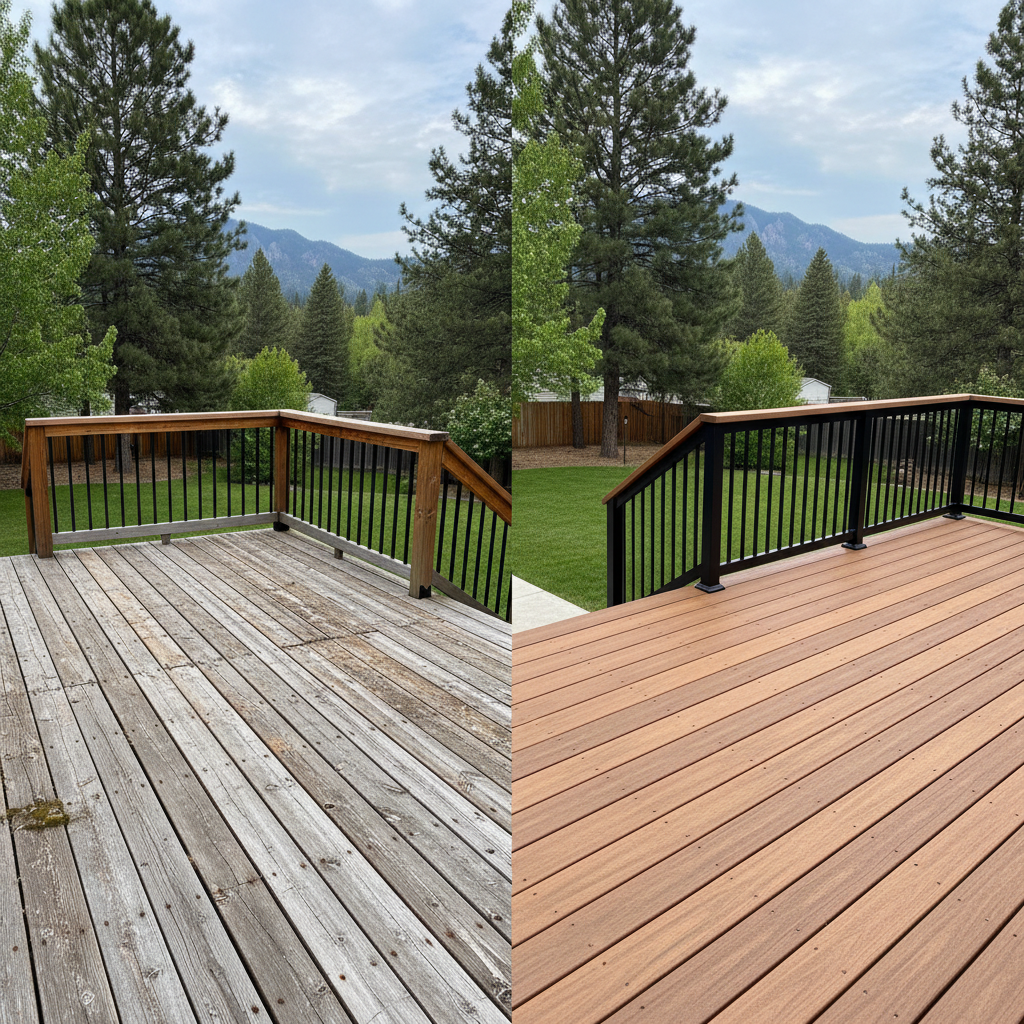
Alright, let's talk Trex. If you're checking out composite decking, Trex is probably a name that's come up. It's a solid product, and for good reason, too. But even within Trex, you'll find different kinds of boards, and understanding the difference between 'capped' and 'uncapped' is pretty darn important for us here in Missoula.
I see a lot of folks get mixed up by this, or even worse, they make a decision without really knowing what they're getting into. So, I'm going to lay it out for you straight, just like we were chatting over a cup of coffee.
What's the Deal with 'Capped' vs. 'Uncapped'?
Think of it this way: uncapped composite decking is the original version. It's a mix of wood fibers and recycled plastic, all pressed together. It's durable, sure, but it's also porous. That means it can soak up moisture, and it's more likely to get stained, fade, or even grow mold and mildew if you don't take care of it properly.
Capped composite, on the other hand, is like the uncapped version but with a high-performance shell wrapped around three or four sides of the board. This cap is usually made from a different, tougher plastic polymer. It's basically a protective shield. Most of what Trex sells today, especially their fancier lines like Trex Transcend or Trex Enhance, are capped boards.
Cost: Where Your Dollars Go
Let's not beat around the bush; cost is a big deal for everyone. Generally, uncapped composite decking will be cheaper upfront. It's the more basic product, so the material cost per linear foot is lower. If you're on a really tight budget and want composite, this might look pretty appealing.
Capped composite, with its extra layer of protection and often more sophisticated manufacturing, will cost more per board. There's no way around that. However, when we're talking about the total cost of building a deck, the material difference isn't always as shocking as you might think once you factor in labor and framing. Plus, you've got to consider the long-term value, which brings us to...
Durability & Longevity: Standing Up to Montana Weather
This is where capped decking really shines, especially for us. We get some wild weather here in Missoula, don't we? Hot, dry summers that bake everything, then cold, wet, snowy winters. That kind of constant temperature and moisture fluctuation is tough on any outdoor material.
Uncapped composite, because it's more porous, can expand and contract more with moisture changes. It's also more prone to fading from UV exposure and staining from things like spilled BBQ sauce, decomposing leaves, or even just plain dirt. I've seen older uncapped decks in areas like the Rattlesnake Valley, where they get a lot of shade and moisture, develop mildew spots that are a real pain to clean.
Capped composite? That protective shell is a total game-changer. It makes the boards much more resistant to:
- Fading: The cap has UV inhibitors that keep the color looking good for years.
- Staining: Spills just bead up and wipe away. Easy peasy.
- Scratching: The cap is harder and more resistant to scuffs and scrapes.
- Mold & Mildew: With less absorption, there's less for mold to grab onto.
For a deck that's going to see snow, rain, and intense sun, that cap is your best friend. It simply holds up better over time against the elements.
Maintenance: Your Weekend or Mine?
This is probably the biggest selling point for composite decking in general, but there's a difference here too. Both types of Trex decks are low maintenance compared to wood. You won't be sanding or staining, which is a huge win.
However, uncapped composite will need more frequent cleaning. You'll likely have to power wash it annually, and you might need to scrub tougher stains. If you spill something like grease, you'll need to get to it quickly before it soaks in. You might also notice some surface mold or mildew that needs a good cleaning.
Capped composite is practically set-it-and-forget-it. A simple hose-down with soap and water a couple of times a year is usually all it needs. Spills wipe up easily, and its resistance to mold and mildew means less scrubbing for you. That cap really makes a difference in how much time you spend enjoying your deck versus cleaning it.
Appearance: Looks That Last
Early uncapped composites sometimes had a more artificial, plastic-y look. They also tended to fade to a duller color over time, losing that initial vibrancy. While modern uncapped options have improved, they still don't quite match the aesthetic of capped boards.
Capped composite boards often feature more realistic wood grain patterns and richer, multi-tonal colors that mimic natural wood much better. The cap also helps preserve that look. So, your deck will not only stay cleaner, but it'll also keep its original beauty longer. You'll have a deck that looks great for years, not just the first season.
My Recommendation for Missoula Homeowners
Look, if you're building a deck here in Missoula, you want it to last and you want it to look good without a ton of fuss. Given our climate and how much a deck gets used, my honest recommendation is to go with capped composite decking. Hands down.
Yes, it's a higher upfront cost. But the long-term durability, minimal maintenance, and sustained good looks are worth every penny. You'll spend less time cleaning and repairing, and more time enjoying your outdoor space with family and friends. For a product that's going to be exposed to our harsh winters and sunny summers, the extra protection of a capped board just makes sense.
At Missoula Deck Construction, we build a lot of Trex decks, and we've seen firsthand how well the capped products hold up. You'll be happier with it in the long run, trust me.